Have you been told that you ‘see too much’, ‘hear too much’, ‘think too much’, ‘feel too much’?
Hello, and welcome.
This website is for emotionally and intellectually intense adults, those who feel deeply, think relentlessly, and live with existential awareness that others around them do not seem to share.
Intense curiosity, intellectual excitability, and emotional sensitivity can be blessings. They may not feel like a gift at times, but with skills and awareness, you can learn to harness your strengths.
We live in a culture that does not fully understand or embrace people like you; intense and passionate individuals are told they are ‘too much,’ ‘too sensitive,’ ‘too overbearing,’ ‘too dramatic,’ or ‘too emotional.’ Many are left feeling misunderstood and unable to make sense of themselves.
The questions this work helps you think through:
What does it mean to live well when you experience the world more intensely than most?
How do you make sense of having been told all your life that you are too much?
What have you been carrying that no one has been able to think through with you?
The Life of Being an Intense Person
You feel things others do not seem to feel, or feel them at a depth others do not seem to reach. You think relentlessly about questions most people set aside.
You have known since you were young that you experience life at a different volume than the people around you. You have spent years editing yourself down to be palatable to people who could not meet you at full intensity. You learned, somewhere along the way, that being fully yourself was costly.
As a young person, you erroneously assumed that most people were like you. When you liked someone, you readily expressed your affection, surprising and sometimes burning others with your authenticity. This caused you to be called weird, or harshly rejected. Without the right guidance, the pattern repeats itself.
You tend to care too much and feel too much, and the degree to which you invest in a relationship almost always exceeds what the other side gives. You dive in too quickly, assume too much good nature in others, and prematurely use your imagination to envision a future.
Highly intense people usually have a rough childhood of confusing episodes, not understanding why they were rejected or why their love seemed unreciprocated. They shut down, whether they want to or not. As much as they want to preserve their innocence and hope, their wounds will not let them.
You carry a moral seriousness that will not let you rest. You hold yourself to standards no one asked you to meet, and often feel guilty for even things you have no control over, such as the privilege you enjoy, or things that you are endowed with. You see the suffering and hypocrisy in the world with painful clarity, and the weight of not being able to do enough about it is constant. You have been called a perfectionist, but you would never consider yourself or anything you do as anything close to ‘perfect’.
After years of being hurt, misread, and carrying more than your share, you find yourself going through life with less intensity. Everything seems more lukewarm, with less vivid colour. You miss the days when you could live with so much vitality, but somehow you can no longer open your heart so easily.
So you learned to minimise your abilities, to qualify your statements, to perform doubt even when you possess certainty. You struggle to take up space, to own your achievements. You begin sentences with “I might be wrong, but.” You became an expert at reading micro-expressions, at catching the flash of awkwardness across a face, at sensing the signals when you were about to be ostracised. Constantly, at the back of your mind you are asking: “How much of my true self can I reveal without editing?”
You have watched people get on with their lives in ways that have never made sense to you. You have always been the one who says the thing no one wants said, even when you ended up getting alienated for it. You have looked for your kind of mind in books, in conversations, in cities, and found only fragments on the internet.
You have intelligent friends who can almost meet you, but not quite. You have read widely and found writers who spoke to parts of your experience but no one who could hold the whole of it.
And there is a particular loneliness in being loved for a false version of yourself. The people closest to you are fond of someone you have been performing for so long that you can no longer locate where the performance ends.
You are not looking to be fixed. You are looking for someone to think with at the intensity you live in, without dismissing you as being too much.
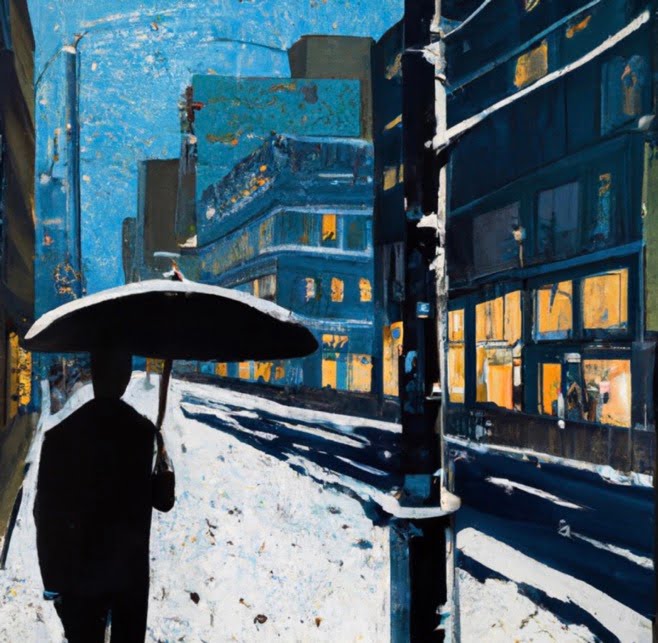
“The existential loneliness is the price we pay for being conscious of ourselves.”
– Rollo May
Intense and Gifted People Struggle in Therapy and Coaching
From the outside you may look entirely fine. You function, you achieve, you hold things together for everybody else. You are often the most competent person in the room. The high-functioning side of you was what kept you going, but it also hides your pain perpectually.
Perhaps, those who can explain their own pain most fluently are often the hardest to reach. Even in therapy, you present so well, so articulately, that everyone around you, including the professionals you turn to, quickly concludes you are fine, even when you are really not. You are drowning, and they think you are waving.
You have likely spent the majority of your life solving your own problems. From childhood, life has been about being there for others. You read the room before anyone else did, absorbed the tension, managed the conflict, looked after the emotional needs of the people who were supposed to be looking after yours. And when you tried to reverse that dynamic, when you looked for someone to lean on, you often found you hit a wall. You get told in so many words that you think too much, worry too much. After enough of these experiences, you stopped trying. You carried the burdens in your heart alone not because you wanted to be without support, but because every attempt to share it left you more wounded than before.
When you decide to talk to a therapist or coach, you arrive already armed with a thorough understanding of your own history. You are fluent, eloquent, and to most observers you come across as psychologically minded and even healthy. You deliver your history with such precision and clarity that most therapists just do not challenge it. They let it slide because it sounds like insight, and the session appears to be progressing.
But when you walk out, something feels wrong. You feel missed. The therapist seemed slow, or maybe not slow exactly, but something was not landing. You edit yourself, slow down, soften a difficult disclosure when you sense it will overwhelm the room. In the end, you find yourself back at the very dynamic you were trying to escape from: being the person who needs to manage everyone’s emotions or shield them from your full self.
When you decide to reach out, the unnamed longing underneath is a deep and painful one: the longing for someone who is genuinely bigger than you. Someone who can see you fully, hold what you are carrying, and offer guidance that does not require you to do the work of receiving it on their behalf.
You are not beyond help. You are fast, intense, direct. That does not mean you are without needs. The intense moral sensitivity, relentless standards, existential angst and perfectionism can leave you drowning.
Ideally, you want someone who can meet your intensity directly, without shrinking from it or pathologising it. They need to not get defensive when you correct them, because you will correct them, plainly and with a straight face, and with most people that lands as an attack. They do not need to keep up with your full speed. What they need is enough security in themselves to tell you honestly when they have missed something, rather than nodding along and pretending they followed. A therapist who pretends to understand you is worse than one who admits they did not, because the pretending recreates the exact loneliness you came to therapy to escape.
You are not too much. You are a person with a specific kind of mind and a specific kind of need, and both deserve to be met with honesty, warmth, and courage. The right container is out there waiting for you, and it is good enough, though not perfect.
They will sometimes miss things and sometimes be slower than you. But they will stay in the room with you. And that, is good enough. It is very good.
Gifted Therapy: Intense People Struggle in Therapy
On Intensity
Intensity can be expressed and experienced in different ways.
You feel a constant stream of both positive and negative feelings, pain, despair, fear, excitement, love, and happiness.
You appreciate beauty more than most, and you can be deeply moved by art and music, and have bursts of creative insights.
You are naturally excitable and passionate, even if you do not show it on the outside.
You are sensitive to unspoken social nuances and intensely dislike dishonesty and inauthentic situations.
You may feel older than others around you, like an old soul.
You feel an almost unbearable sense of moral responsibility, a guilt that never quite lifts, as though you are perpetually failing to do enough for the world and the people in it.
You see the suffering, injustice, and hypocrisy in the world with painful clarity, and you are constantly saddened by not being able to do much about it. Sometimes, you lapse into nihilism.
You are highly driven and have been told you are perfectionistic, which can express as chronic anxiety and restlessness.
You have incessant internal dialogues; it feels impossible to stop your mind from running.
You monitor, constantly and without meaning to, whether it is safe to be yourself in this room.
You have caught yourself abandoning your own position mid-sentence, hearing your voice go slighter and more accommodating, and only noticing afterwards.
You live with existential angst, a sense of urgency, and a constant need to learn and explore.
You experience existential depression over meaninglessness, mortality, and loneliness.
Your psychological distress is sometimes expressed in the body, headaches, panic, sleep disturbance.
You may have been misdiagnosed or mislabelled by the mental health system.
You may have been identified as a gifted child or adult but never understood why you suffered so much.
You find that most conversations end at the surface, and the depth you want is something you are left craving.
For a fuller description of emotional intensity, see here.
Common Criticisms Faced by Intense and Sensitive Adults
“Stop thinking too much.”
“You’re too perfectionistic.”
“You overthink everything.”
“You are moving too fast, you are too ambitious.”
“You’re too critical of yourself and others.”
“Why do you have to question everything?”
“Why can’t you just let it go?”
“You take everything too seriously.”
“You’re too high maintenance.”
“You expect too much from yourself and others.”
“You’re too much.”
Working with Imi
Hi, I am Imi. I work with emotionally and intellectually intense, existentially aware adults.
I have over fifteen years of clinical experience as a psychotherapist and art therapist, including work with Médecins Sans Frontières and the NHS. My training includes art therapy, philosophical counselling, Jungian psychology, mentalization-based treatment, EMDR, Schema Therapy, mindfulness-based and trauma-informed modalities, and I work integratively with psychodynamic, philosophical, and creative methods.
Most of my clients have been intense thinkers and feelers for as long as they can remember. Many have read widely, tried therapy, even AI, but left wanting deeper and more challenging conversations. If that sounds like what you have been looking for, you can read more about how I work and what a session looks like here.
You can find more about my background, publications, and interviews here, and my personal journey here.
I look forward to hearing from you!
Reviews, Testimonials and Kind Words
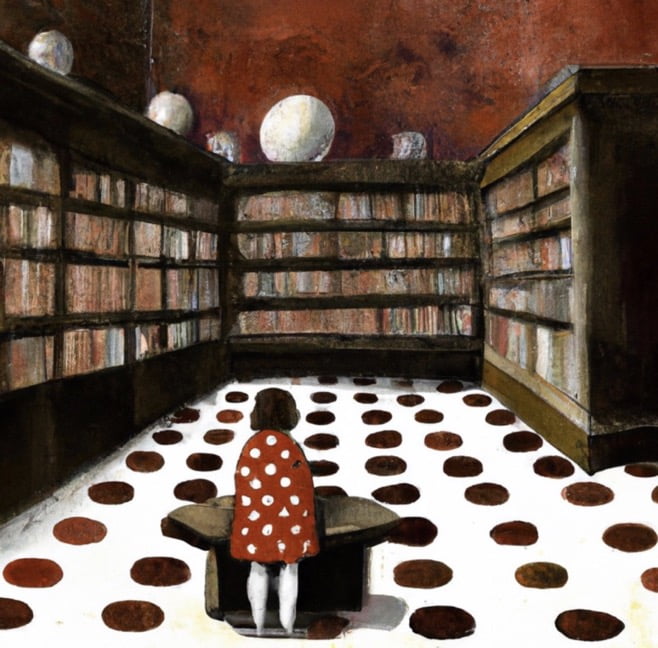
Your Preferred Love Language is whatever you did not get in childhood. Sounds so simple, yet so evocative.’

Imi Lo is a psychotherapist and consultant who has dedicated her career to helping emotionally and intellectually intense people turn their depth into strength. She has written three books with Hachette: Emotional Sensitivity and Intensity, The Gift of Intensity, and The Gift of Empathy.
Imi has over fifteen years of clinical experience, including roles with Médecins Sans Frontières and the NHS (UK), and holds three master's degrees in Mental Health, Buddhist Studies, and Global Cultures. Her training includes art therapy, philosophical counselling, Jungian psychology, mentalization-based treatment, EMDR, Schema Therapy, mindfulness-based and trauma-informed modalities, and she works integratively with psychodynamic, philosophical, and creative methods.
You can contact Imi for a one-to-one session tailored to your specific needs.