Table of Contents
The gifted trauma of feeling humiliated is something almost every gifted adult can relate to.
You know the feeling in your body before your mind can name it. That sickening sensation in your stomach when someone begins explaining something you already know. The heat that rises when you are talked down to by an authority figure you perceive to have no real authority, or when you watch someone else steal your insights and present them as their own.
You may find yourself re-experiencing this sense of humiliation constantly, triggered by what seem like the smallest slights.
Whether or not you can verbalize it, the trauma of feeling humiliated forms part of the exhausting reality of existing with a mind that processes differently, faster, and more intensely than those around you. The chronic feeling of being humiliated wherever you go is a gifted trauma that rarely gets named as such.

“You have to accept that sometimes that’s how things happen in this world. People’s opinions, their feelings, they go one way, then the other. It just so happens you grew up at a certain point in this process.”
―
The Gifted Trauma of Being Humiliated
The shadow side of not just thinking more, but thinking differently, is real. Your mind made connections others did not see, spotted patterns they missed, and questioned assumptions they had never thought to examine. Your gifts became a burden that isolated you from peers and frustrated adults who saw you as a threat to their equilibrium. You were not arrogant or even proud. But you were not yet aware, at least not consciously, of the blatant gap between yours and your elders’ intellectual capacity, curiosity for the world, drive, and speed of learning.
You may still remember how and when the gifted trauma of feeling humiliated was planted. It was when you were suffocated by adults who force-fed you information you did not need, when you were trapped in a body too small for your mind, in a household too conservative for your spirit, in a world that moved too slowly, explained too much, and understood too little. From your earliest memories, you lived with a disconnect between your inner experience and how others perceived you.
You remember the peculiar loneliness of being surrounded by people who were physically present but psychologically unreachable. You remember the strange sensation of being spoken to as though you were not quite there. You were talked to as someone who needed things broken down, repeated, and explained in smaller pieces. And you learned to wear the face of that simpler child, because the alternative was to watch the adults around you become confused, irritated, or worse, hostile.
The tragedy might be that the adults tasked with nurturing you were often the least equipped to understand what made you different. They operated from their own frameworks of childhood, their own memories of what it meant to be young, not recognizing that their experiences existed in a completely different realm from yours. Perhaps when you tried to make your point, you were “talking back.” When you resisted work that felt meaningless, you were “difficult.” You quickly learned that your natural responses, be it impatience with redundancy, frustration with illogicality, or the need to correct inaccuracies, were somehow wrong, somehow offensive to a world that demanded you shrink and comply.
Some parents struggled with their own unmet potential. Your brightness reminds them of their own unlived possibilities, their compromises and settled-for dreams. You learned to make yourself smaller to protect their ego, to pretend not to know things, to ask for help you did not need just to let them feel useful.
Having narcissistic parents presented a different challenge; they felt threatened rather than proud. Instead of adjusting their parenting to meet you where you were, they doubled down on their authority, desperately trying to prove they were still the adult, still in charge, still smarter. Your giftedness was either a trophy to display or a threat.
Even parents who loved you deeply could become unwitting oppressors who planted seeds of gifted trauma. They wanted to protect you from disappointment, so they cautioned you against ambitions they feared were too grand. They wanted you to fit in, so they encouraged you to hide your light, to play smaller, to pretend interest in things that bored you to tears. They wanted you to be happy, but their definition of happiness required you to be someone you were not. Their “good intentions” made things worse because you found yourself feeling guilty about your resentment. You could not even be cleanly angry. The anger had to be swallowed alongside the gratitude you were expected to have. The gifted trauma was that you had to, in your young heart, hold both the resentment and the shame about the resentment. The longing to be seen and the guilt for wanting something your parents could not give.
The Secondary Gifted Trauma: Shrinking
The first layer of gifted trauma is feeling humiliated, when you are constantly talked down to, of being trapped at an age and in a body that did not reflect your inner reality. The second layer of the gifted trauma may be worse: You eventually learned to participate in shrinking yourself. What had started as an externally imposed oppression became an internal compulsion to shrink, which morphed into chronic self-betrayal and even corrosive shame.
You might even have used your intelligence to hide your intelligence. You used your brilliant mind to master the art of survival in the world outside of Hogwarts. The humming question constantly at the back of your head is: how much of myself can I express without causing humiliation? You became an expert at reading micro-expressions, at catching the flash of awkwardness across faces and sensing signals when you were about to be ostracized.
Performative humility may have started as a necessary survival strategy, but it has become so natural to you that your heart has forgotten it was a survival tactic in the first place. You have trained yourself to see your thoughts and unique insights as being dangerous, and you have begun doubting whether you are ‘safe for the world’. You now start sentences with qualifiers like “I might be wrong, but…” “It is probably nothing…” “I am sure you know better…” Just as a way of shaving off the sharp edges from your speech, ‘in case’ they hurt anyone. The humiliation lives in the body as a constant muscular apology: the hypervigilance of needing to constantly monitor whether it was safe to be yourself, the tendency to minimize your abilities, to qualify your statements, to pretend you are in doubt even when you know. I mean, just notice how you quickly detach and dissociate from your own rage when someone begins to talk down to you.
Notice how your voice changes. How it becomes lighter, more accommodating, almost childlike. Notice how quickly you abandon your own position, how reflexively you cramp yourself into a smaller and smaller space. Notice the small death that happens each time, even though you have gotten so used to living with the ghost of gifted trauma that you do not even register the automatic self-extinguishing anymore.
Some gifted children shrink. Others perform. Sometimes you did both, swinging between disappearing and desperately showing off, trying to find the frequency that would finally earn you the gleam in someone’s eyes. The performance was not vanity. It was a starving child knocking on every door, hoping one would open. When none did, you learned that the problem must be you. Too much or not enough. Never simply right.
Another side of the gifted trauma is the loneliness that comes from being loved for a false version of yourself. You have learned via experience that others in your life could only love the simplified, edited, manageable version you carefully crafted. The gifted trauma has taught you that “I love you” was never full and unconditional, but a concealed “I love you when you are helpful, making me look and feel good, and not being too much.” You might have intellectually known you were loved, but you were not known. You might have been cherished, but you were not seen.
In psychology, there is a concept called “twinship needs”, and its deprivation forms the core of much gifted trauma. Twinship, or alter ego needs (Kohut), describes the developmental requirement for feeling a degree of likeness to others, for recognizing your own humanity mirrored back through similar others. When met, twinship experiences lead to feeling connected and being part of a larger human community. For gifted children, twinship often never came. There were no role models, no real peers. You were different before you had the developmental foundation to bear it. When twinship was absent in childhood, you never built the internal architecture to hold yourself steady without external mirrors. It is tempting to become dependent on the rare others who could see you. This is how the human psyche is designed, and it is certainly not a weakness. Even now, you struggle to find an equal partner whom you can consider a soulmate. When connection does appear, it comes so infrequently that you end up becoming overly attached or anxious about losing it, knowing how rare such understanding truly is. And when you lose it, the grief is compounded by the knowledge that you may wait years before you find it again.
And as a result of deep isolation, absent twinship, and inadequate mirroring, you have internalised the message that something was wrong with you, and that became corrosive shame you carry into adulthood. This is the quiet, accumulative nature of gifted trauma: not one dramatic wound, but a thousand paper cuts that never quite healed.
Workplace Triggers: Where Gifted Trauma Finds You Again
The workplace often becomes a site of retraumatization for gifted adults. Gifted trauma does not stay in childhood; it follows you into boardrooms, meetings, and conversations where the old dynamics replay with new faces. The hierarchies, the need to defer to authority regardless of competence, all replicate the power dynamics that have given you the original gifted trauma.
Gifted women may be particularly affected. Research on gifted girls shows they often face a double bind: pressured to be smart but not too smart, capable but not threatening, achieving but still likable. The gifted girl learns early that her intelligence makes others uncomfortable. She learns to perform a careful dance of competence-but-not-too-much, knowledge-but-with-deference, brilliance-but-with-apology. Your natural assertiveness, your appropriate anger at incompetence, your direct communication style: all of these get filtered through gendered expectations that punish women for displaying the very qualities that would often be celebrated in men. What would be seen as confident leadership in a male colleague becomes “too aggressive” when you do it. Your justified frustration with inefficiency gets labeled as “emotional” or “difficult.” Most outrageously, your passionate advocacy for better solutions gets dismissed as “dramatic”: a word that would likely not be applied to a man expressing the same intensity about the same issues. So it makes sense now that when your male colleagues mansplain to you, impose on you, silence you, they are reactivating every moment from childhood when you were forced to play the nice one and show respect for elders you actually saw through.
If you feel enraged to a point you struggle to contain it, it is because your body recognizes this as an existential threat to your authenticity. The younger you had no choice but to endure it, to smile and nod and pretend gratitude for help you did not need. But the adult you feels the accumulated rage of every moment of forced compliance, and that rage is understandably volcanic. It carries the weight of every time you had to betray yourself just to survive.
The rage is not really about the colleague who just interrupted you. It is about being eight years old and knowing the answer, but being told to let someone else have a turn. It is about being fifteen and watching your idea get attributed to someone else. It is about every meeting where you held your tongue, every dinner where you played dumb, every relationship where you made yourself digestible. The body remembers the internal oppression.
The anger you feel might surprise you sometimes, as it seems disproportionate to the situation at hand, but please compassionately understand that it is not pointing to the current reality. It is actually the rage at lost opportunities, at years of being misunderstood, at the energy spent trying to fit into spaces too small for you. The anger is, in fact, proportional when you consider it as an accumulative response to the hermeneutical injustice you have endured for years.
Living with the gifted trauma of feeling humiliated is extremely isolating. It feels like a social taboo to say you feel humiliated when no one intended to offend, and you can hardly be honest about the daily abrasion of being too intelligent for your pond. What you experienced was a kind of epistemic loneliness, like an automatic exile of knowing things that could not be shared, seeing things that could not be shown, and understanding things that could not be communicated. This wound went beyond intellectual isolation; it struck at the deeper level of having your entire way of processing reality called into question.
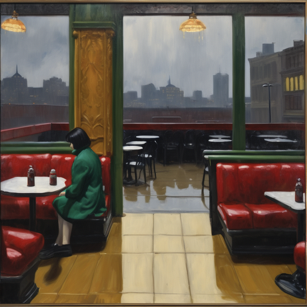
“What’s that?”
“The laundry basket?”
“No, next to it.”
“I don’t see anything next to it.”
“It’s my last shred of dignity. It’s very small.”
―
The Path Forward
Understanding these reactions as trauma responses rather than overreactions is the first step to healing. Your unique form of gifted trauma is real, even if no one called it that when you were living through it. Your body is telling you the truth. The hypervigilance around being talked down to, the visceral response to being underestimated, the way your body contracts when someone begins to explain something you already know… these are not character flaws or oversensitivities. You are in a situation that has historically been harmful to your authenticity and integrity.
Before you can move forward, you may have to grieve. Grieve for the childhood you did not have, for the wise guidance you needed but did not receive, for having to grow up too quickly, too soon, for being ostracised when you were just showing integrity, for never having found twinship connections. Healing is about finally allowing the full truth to exist: that you needed more than the adults in your life could give, and wanted more understanding than the world could offer.
You may have spent decades telling yourself it was not that bad, that others had it worse, that you should be grateful for what you did receive. And perhaps all of that is true. But it does not erase the other truth: that something in you went unheld. That there were rooms in your mind that no one ever entered even when you desperately needed someone to.
You were not wrong to need more. You were not bad for seeing what you saw, knowing what you knew, understanding what you understood. The fact that the adults in your life could not meet you there was a limitation of their circumstances, not a judgment on your worth. The intellectual gap was real. The role reversal was real. But your empathy for their limitations does not negate your right to grieve what those limitations meant for you. Your understanding of their humanity does not mean you have to continue protecting them from your full self. Your love for them does not require you to keep playing dumb, keep translating, keep shrinking to fit into spaces that were never designed to hold you.
But then, to move forward, your body needs to learn that the danger has passed, that you no longer depend on the approval of those who would diminish you for their own comfort. Every time you minimize your intelligence, qualify your insights, or pretend uncertainty, you are still acting from that child trying to not trigger envy, attack, or put down. Every time you over-explain to avoid seeming condescending, or under-explain to avoid revealing how much you see, you are still performing that exhausting dance of pretend submission. The question becomes: For how much longer? Maybe the second half of your life asks something different of you. It asks whether you are willing to stop performing, to let the mask fall, to finally inhabit your own mind without an apology. It asks whether you are ready to risk being seen in full, knowing that some will turn away, but trusting that you will survive without needing the entire world to be your friend.
Those who have benefited from your self-betrayal might experience your growth as abandonment, your self-expression as rejection, your boundaries as cruelty. When the equilibrium is shaken up, they are likely going to be upset and may even attack: “You think you are better than us”, “You have become arrogant”, “We do not know you anymore”. But maybe they never knew you, they only knew the character you played for their comfort. They might accuse you of changing, not recognizing that you are finally just stopping the performance you have maintained since childhood. Do you really want to spend the rest of your life investing in this facade for their comfort, when the cost is, as Mary Oliver calls it, your one and only life? Let them call it arrogance. Let them call it coldness. Let them mourn the version of you that was easier to be around. You can hold space for their loss without returning to the cage of gifted trauma. Always remember, their discomfort is not yours to carry. Their distress is not your emergency to resolve.
Your revolt need not be loud or dramatic. It can start as a seed of quiet refusal. Essentially, healing from the gifted trauma involves reclaiming your right to know what you know without apology or pretense. You will relearn that even if your intelligence intimidates some people, it is not your job to manage their envy. Alfred Adler’s concept of task separation applies here: it is your job to show up as yourself, and it is others’ job to manage their own emotional reactions. You need not protect them.
Your brightness is not a weapon unless someone chooses to experience it as one. Your intelligence is not an accusation unless someone chooses to receive it as one. Your gifts are not a burden unless someone chooses to frame them as one. You are not required to forgive those who diminished you. You do not need to understand why they needed you to be less. You are not obliged to maintain relationships that depend on your diminishment. You are not asked to be grateful for a love that could only tolerate part of you.
Eventually, I am still hopeful that you will find those who can celebrate your brightness without feeling diminished by it. These people exist, though they might be rare. They are the ones who light up when you share a complex thought, who match your intensity with their own, who see your perception as a gift rather than a threat. You might initially distrust their acceptance, waiting for the moment when you are too much, when they need you to dial it back, when your brightness becomes a problem they need you to solve by becoming less. You might find yourself preemptively dimming even when no one has asked you to. It takes time to learn to sustain your own brightness, to tolerate being seen in your fullness, to believe that your full self is not just acceptable but welcome.
You may find yourself, even among those who truly see you, waiting for the other shoe to drop. Scanning for the micro-expression of fatigue. Preparing your apology in advance. The body may have to heal from the muscle memories of gifted trauma slowly. Let it take its time. It has been bracing for rejection for a very long time. It does not yet know that some doors stay open. But if you are gentle and open, it will rewire itself.
In the end, perhaps the answer is in accepting that your mind may never be fully witnessed, fully met, fully understood, and choosing to honor it anyway. Just a non-grandiose, unexaggerated recognition: this is how I am built. The intensity, the speed, the depth: it is not a performance or a pathology. It is just what is.

Imi Lo is an independent consultant who has dedicated her career to helping emotionally intense and highly sensitive people turn their depth into strength. Her three books, Emotional Sensitivity and Intensity, The Gift of Intensity, and The Gift of Empathy, are translated into multiple languages.
Imi holds three master's degrees in Mental Health, Buddhist Studies, and Global Cultures, alongside training in philosophical counseling, Jungian psychology, and other modalities. Her multicultural perspective has been enriched by living and working across the UK, Australia, and Asia, including with organizations such as Médecins Sans Frontières/Doctors Without Borders and the NHS (UK). Throughout her career, she has served as a psychotherapist, art therapist, suicide crisis social worker, mental health supervisor, and trainer for mental health professionals.
You can contact Imi for a one-to-one consulting session tailored to your specific needs.