Waiting mode describes the inner experience of being unable to do anything because something uncertain, or a future event, is pending. It could be an appointment, an exam result, a medical scan, a conversation that has not happened yet, a text message that may or may not receive a reply. The pending thing may be hours away or weeks away, significant or routine, but when you are in a waiting mode, that is what takes over your life, your attention, your energy, and your ability to focus. If you have an appointment at four in the afternoon, the entire morning you cannot do anything else. If you have an exam on Friday, the whole week is practically gone, where you live in suspension until then. Although rationally you know there is nothing you need to do right now, mentally and emotionally the unresolved thing clouds out everything else. Life feels like it is in suspension. You are going through your day-to-day life but not quite in it. You cannot relax, or rest, or work, or settle, because something does not feel right, or okay. You simply cannot let go until you fix that one thing.
The term waiting mode has in recent years gained traction in neurodivergent communities, more specifically with ADHD. For someone with ADHD, the waiting mode, although by and large unproductive in its overall outcome, serves a well-intentioned function. When a person’s internal sense of time is unreliable, when they have a long history of missing appointments or underestimating how long things take, the waiting mode is a kind of organising device that compensates for differences in executive function. The idea is that by suspending all activities and focusing only on what is pending, the brain will not miss it.
But waiting mode is not something that happens only with ADHD. Waiting mode is also pervasive among people who have anxiety, particularly those with idealistic and perfectionistic tendencies, and among the emotionally intense and highly conscientious among us.
For those of us who have a tendency to hyperfixate on a future event and keep ourselves in a waiting mode, the freeze is not a management device aimed at keeping track of time. There is something compulsive and obsessive in its quality. The mind locks onto the pending thing the way an intrusive thought locks into place: it is persistent, repetitive, and resistant to voluntary redirection. You may know, at some level, that your preoccupation is disproportionate. You know you are not being productive by circling the same worry. And yet you cannot just stop it with willpower, because the fixation is acting at a level deeper than conscious choice, one that involves your entire nervous system.
The practical advice developed for the ADHD version of waiting mode has included things like scheduling appointments early, setting multiple alarms, and using waiting time for small tasks. But these may not help you if the problem is not about executive function or practicality. For you, the problem may be more existential and ontological in nature. The roots of this version of waiting mode lie not in your executive function but in how safe you feel in this world and how you relate to uncertainty in life.
When you dig beneath the surface of this fixation you may find something that runs deeper than mere intolerance of uncertainty, something closer to a feeling of ontological unsafety, a sense that the ground beneath your life has become shaky and conditional, and that it can only solidify again when the uncertain thing resolves.
The origins of this feeling may reach far back into your early history. A child who grew up in a chaotic or unpredictable household, where warmth could be withdrawn without warning and safety was never guaranteed, learns early that the world is only safe when everything is under control. A child who was parentified, made responsible for managing adult emotions or household stability, develops a vigilance that does not switch off when childhood is over. A young person who was disadvantaged, bullied, or made to feel that they did not belong learns that constant self-improvement and relentless optimisation are the only reliable routes to acceptance and safety.
The waiting mode and its hyperfixation pattern are likely linked to perfectionistic and idealistic tendencies. You may not relate to the word “perfectionistic” because when you look at yourself and your life you mostly see how far they are from perfect. But perfectionism, at its root, is not about achieving real-life “perfection.” It is a deep, often unconscious yearning for wholeness, for things to be complete, settled, in their right places so you can feel safe. It is a survival mechanism that learned early to scan for anything that falls outside the smooth and expected pattern, and to treat that deviation as a signal of danger.
We may also think of the waiting mode as a form of a post-traumatic threat response, one that can follow from both complex developmental trauma (CPTSD) and single-event trauma. Your body has essentially gone into a fight, flight, or fawn state. Your mind has identified the pending uncertainty as the threat, the one missing piece that will restore safety. Every cognitive and emotional resource you have now gets allocated to monitoring that threat.
Notice how you simply cannot rest when something feels unfinished or unresolved. Your mind latches onto the next thing that needs fixing, the next problem that needs solving, the next variable that needs to be brought under control. Even when things are, by any reasonable standard, good enough, your internal scanner moves on to the next gap, the next way to optimise. It is as if your system is running a programme that says: if you can just get everything right, if you can just close every open loop, you will finally be allowed to rest.
Another dimension of this pattern is where you place your locus of control when it comes to your sense of safety. It is as though your sense of safety lies not in your own resilience but in other people’s appraisal, their availability, their love and attention. When those are going fine, you can breathe. When the signals shift or become uncertain, you feel paralysed.
What all of this amounts to is that the waiting mode you experience is not a practical issue but something closer to a threat-driven survival state in which your entire sense of safety has become fused with external signals. You freeze because the pending event has become so loaded with meaning, so entangled with your sense of who you are and whether you are allowed to exist, that everything else feels irrelevant.
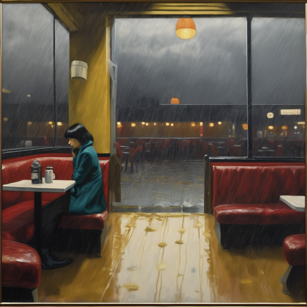
Forget the future. When and if it comes, you’ll have the same resources to draw on – Marcus Aurelius
Getting Out of Waiting Mode
If you slow down enough to listen to what is actually being believed in the moment of freezing, you may begin to hear the unconscious beliefs that have been quietly running your life. Things like: I need someone’s approval to be safe. Or: I need to know the outcome before I am allowed to get on with my day. Or: if people know I screw up, that would be unbearable. These are not thoughts you have consciously chosen, but they have been operating in the background for so long that they no longer feel like beliefs you have adopted, but just the way things are.
But ultimately, to free yourself from constant loops of waiting mode may require deeper work than cognitive reframing or practical tips can offer. It is about how safe you feel in the world.
The waiting mode loosens its grip when something shifts in your relationship to life’s uncertainty and imperfections. The hyperfixation is held in place by a conviction that you cannot afford for things to go wrong, that a bad outcome would not be survivable.
The deeper shift is not a technique or an exercise. It is a slower, harder process of expanding what you can tolerate. It is the growing, grudging, hard-won recognition that things can go wrong and you will be okay. And that okay and survivable might be good enough, and that not everything needs to be optimised or maximised.
The consequences, whatever they turn out to be, will come whether or not you welcome them, and you will deal with them when they do, just as you have many times before. You do not need to pre-empt every possible outcome to survive it. You do not need the world to be settled before you are allowed to live your life. You do not need to be in full control to start living.
The shift may not come quickly, or radically, or through sheer willpower or positive thinking. But a small change in direction can carry you a long way, and once the momentum begins it tends to continue. When you start to practise living with uncertainty and relocating your sense of safety from the world around you to something within yourself, something will slowly grow.
Perhaps you have always been more able to live on shaky ground than you give yourself credit for.

Imi Lo is a psychotherapist and consultant who has dedicated her career to helping emotionally and intellectually intense people turn their depth into strength. She has written three books with Hachette: Emotional Sensitivity and Intensity, The Gift of Intensity, and The Gift of Empathy.
Imi has over fifteen years of clinical experience, including roles with Médecins Sans Frontières and the NHS (UK), and holds three master's degrees in Mental Health, Buddhist Studies, and Global Cultures. Her training includes art therapy, philosophical counselling, Jungian psychology, mentalization-based treatment, EMDR, Schema Therapy, mindfulness-based and trauma-informed modalities, and she works integratively with psychodynamic, philosophical, and creative methods.
You can contact Imi for a one-to-one session tailored to your specific needs.